Research

Aerial robots can reach places nothing else can, but they are still poor at interacting with the physical world. Batteries limit how long they fly, and precise, autonomous physical interaction needs advances in control, perception, collaboration, and learning.

Current directions

Learning Cooperative Floating-Base Robotic Manipulation

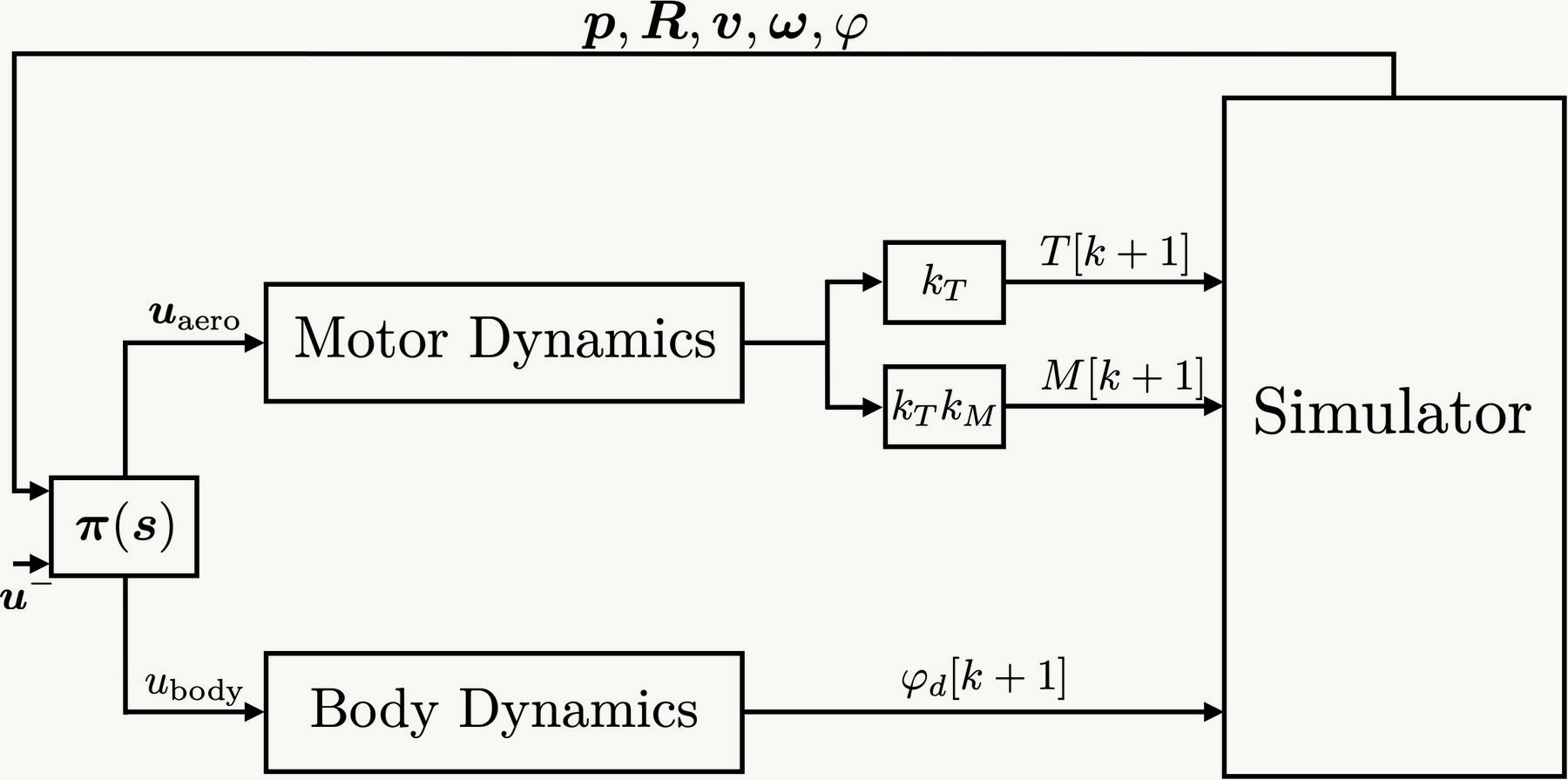
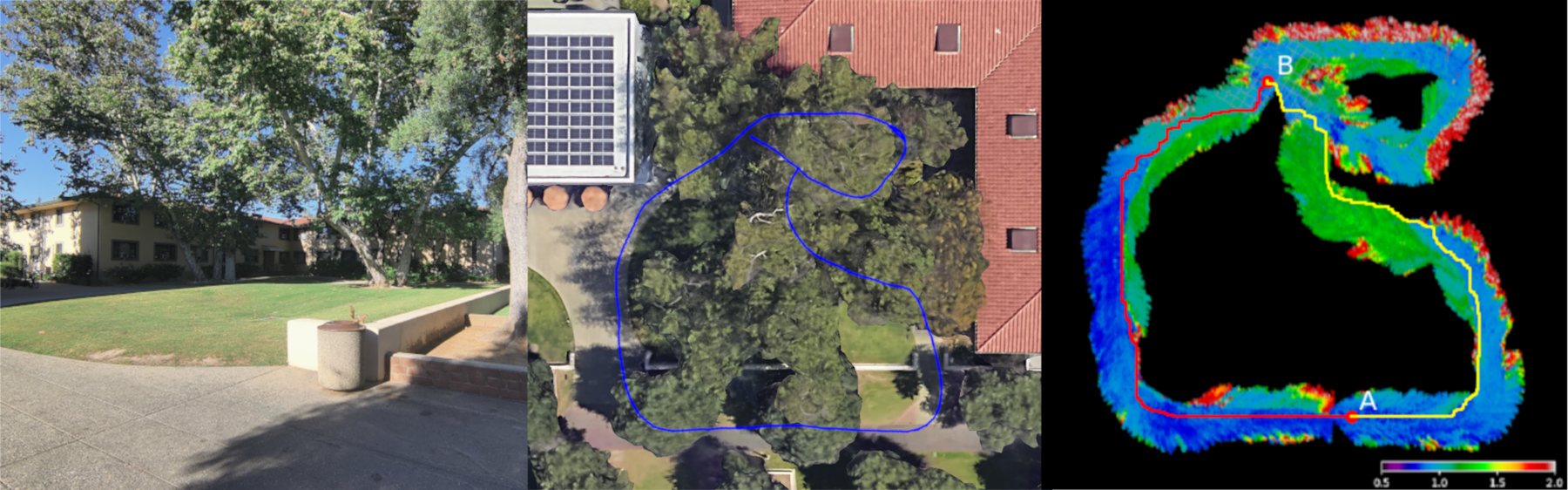
We are working on floating-base cooperative robotic manipulation, with aerial manipulation as one example. In this setting, we train aerial robots to perform contact-rich cooperative behaviours using only onboard sensing, such as RGB-D and inertial cues. Central themes include energy-aware autonomy, cooperation, and dexterous manipulation.

  • In progressVision-language-action models for drone navigationDrones that fly to a target named in natural language, trained in Gaussian-splat reconstructions of real flight spaces, as a first step toward language-guided aerial manipulation. With A. Pantalos and M. Kovač.
  • Open positionsStudent Project Positions in Robot LearningPDFMaster's theses and student projects. Several open positions for Cambridge and visiting students, starting from January 2027. Topics are defined together with each student, broadly within general-purpose robot manipulation, vision-language-action models, diffusion policies, imitation learning, reinforcement learning, robot collaboration and aerial manipulation.

Task-driven multi-modal robot design

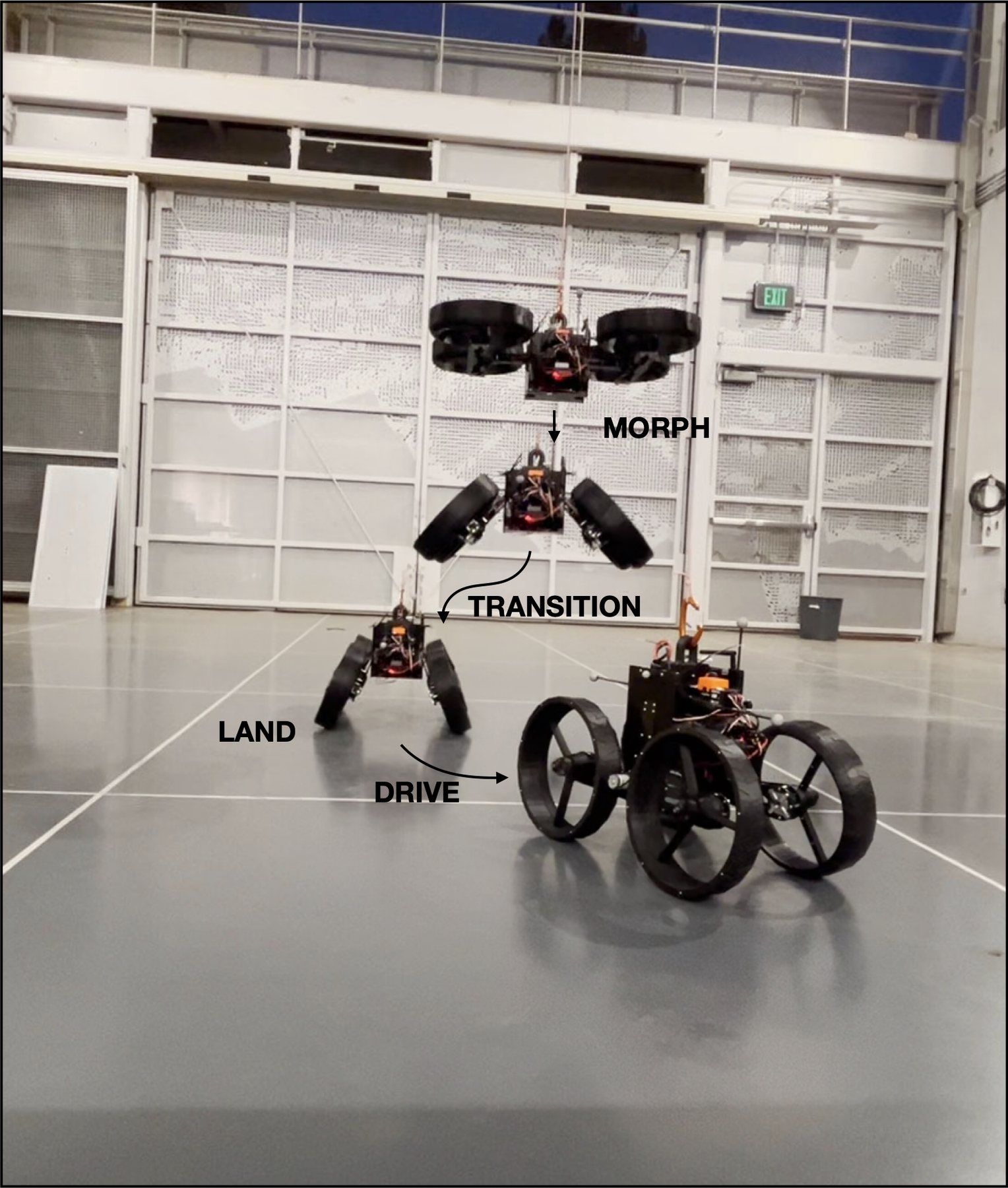
Multimodal robots have clear advantages, but their design space is largely unexplored. Instead of a single “optimal” configuration, we look for morphologies tailored to specific tasks, found by inverse design that links task requirements to morphology, actuation and aerodynamics. In parallel we study how fluid–structure interaction, such as passive thrust vectoring and proximity to walls and ceilings, can improve efficiency and control authority.

  • Under reviewWake vectoring for efficient morphing flightPassive deflectors in the frame of a morphing robot recover up to 40% of the thrust lost when its rotors tilt. With S. Schumacher and M. Gharib.
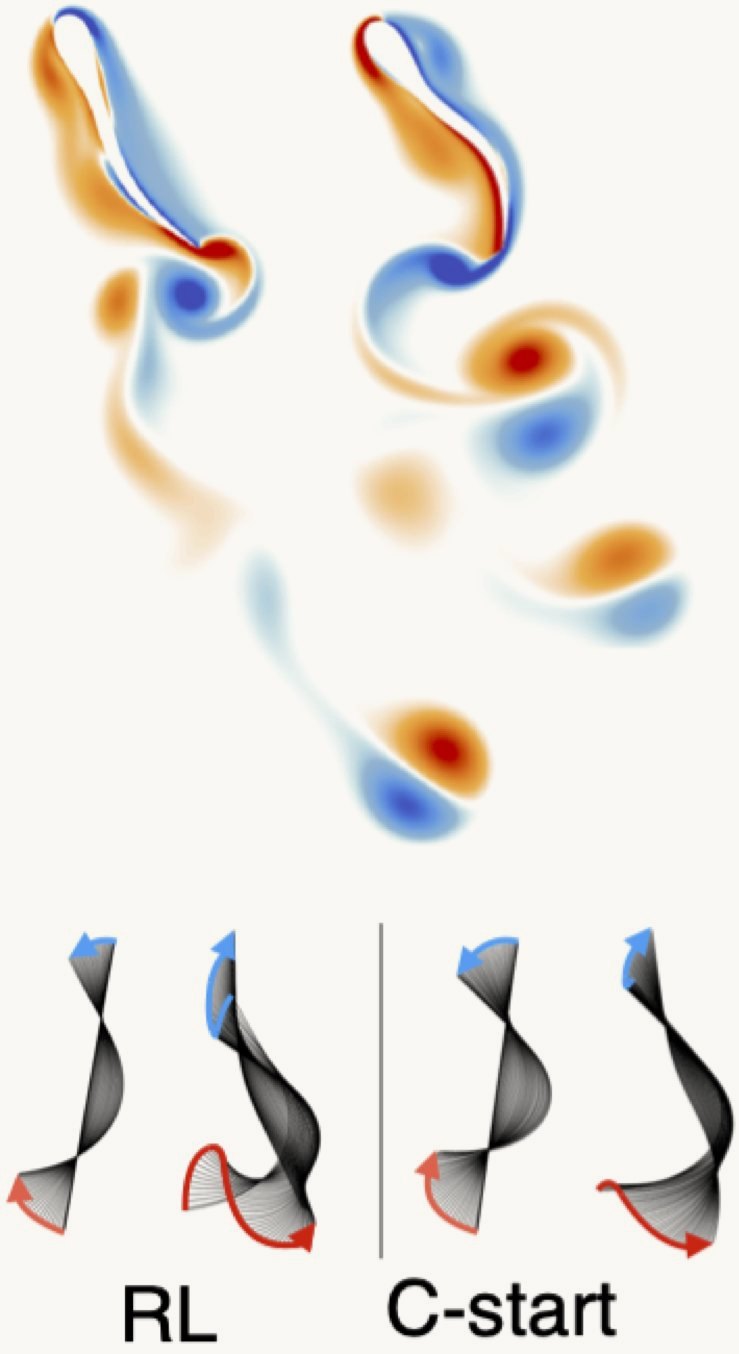
  • In progressRobotic water jetting with an elastic artificial mantleA robot that propels itself by changing shape: an elastic mantle stores energy as it fills and releases it as a jet of water. With J. Ro, P. H. Nguyen and M. Kovač.
  • Open positionsStudent Project Positions in Robot LearningPDFMaster's theses and student projects. Several open positions for Cambridge and visiting students, starting from January 2027. Topics are defined together with each student, broadly within general-purpose robot manipulation, vision-language-action models, diffusion policies, imitation learning, reinforcement learning, robot collaboration and aerial manipulation.

Featured research

The work the lab builds on, from Caltech, ETH Zurich and EPFL. Each topic opens a page with its papers, figures and videos; the full list is on the Publications page.